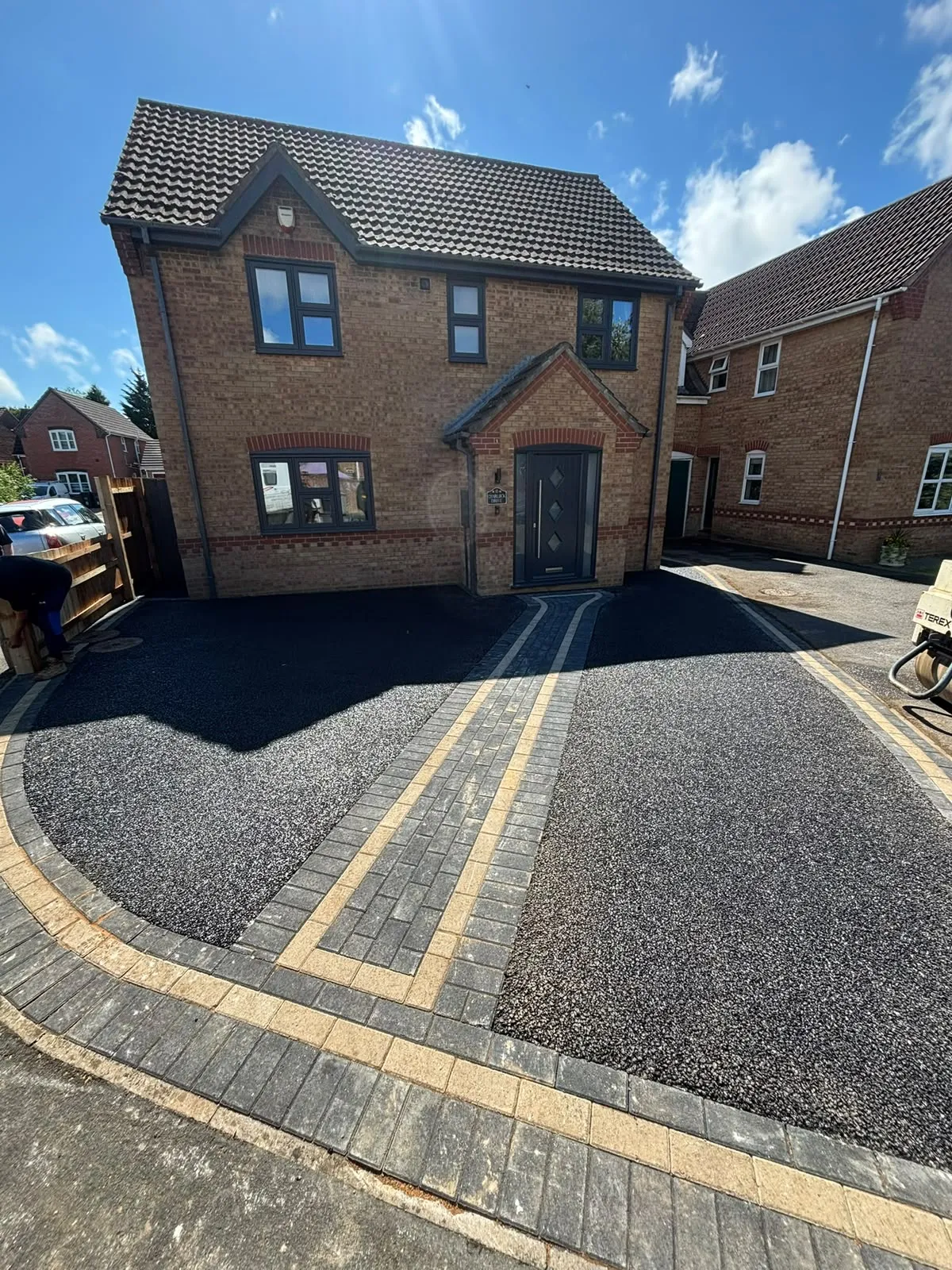
Tarmac driveways in Wisbech
Fast to lay, tough and cost-effective. A clean, classic black finish, with block borders if you want to dress it up.
Fast to lay, tough and cost-effective. A clean, classic black finish, with block borders if you want to dress it up.
Tarmac
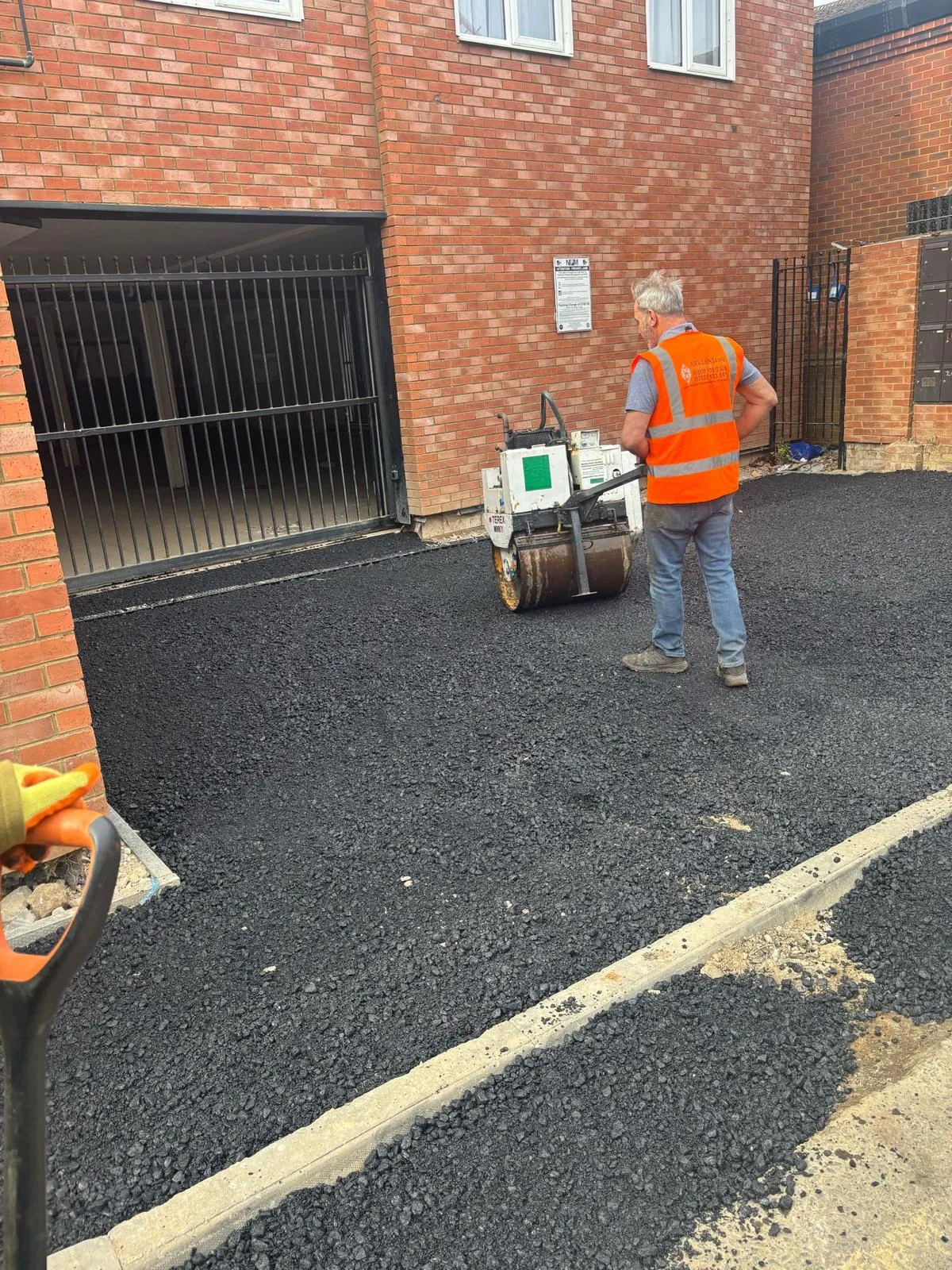
Tarmac is one of the quickest and most cost-effective ways to get a smart, hard-wearing driveway in Wisbech and the surrounding towns. Laid hot and rolled to a smooth finish over a proper stone base, it stands up to daily use and looks clean and tidy.
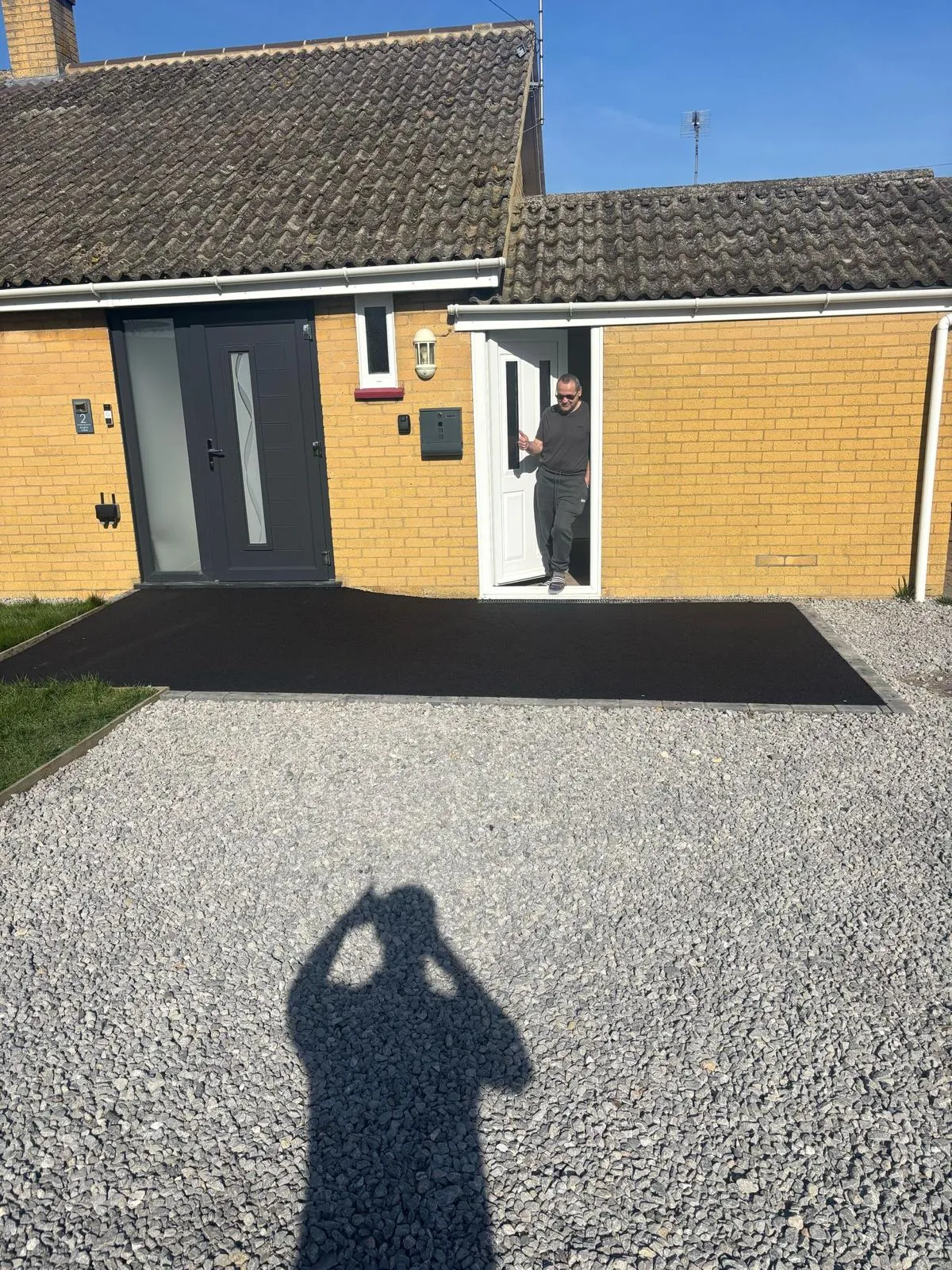
It is also a great match for larger drives and shared accesses, and a block-paved border lifts it from practical to smart.
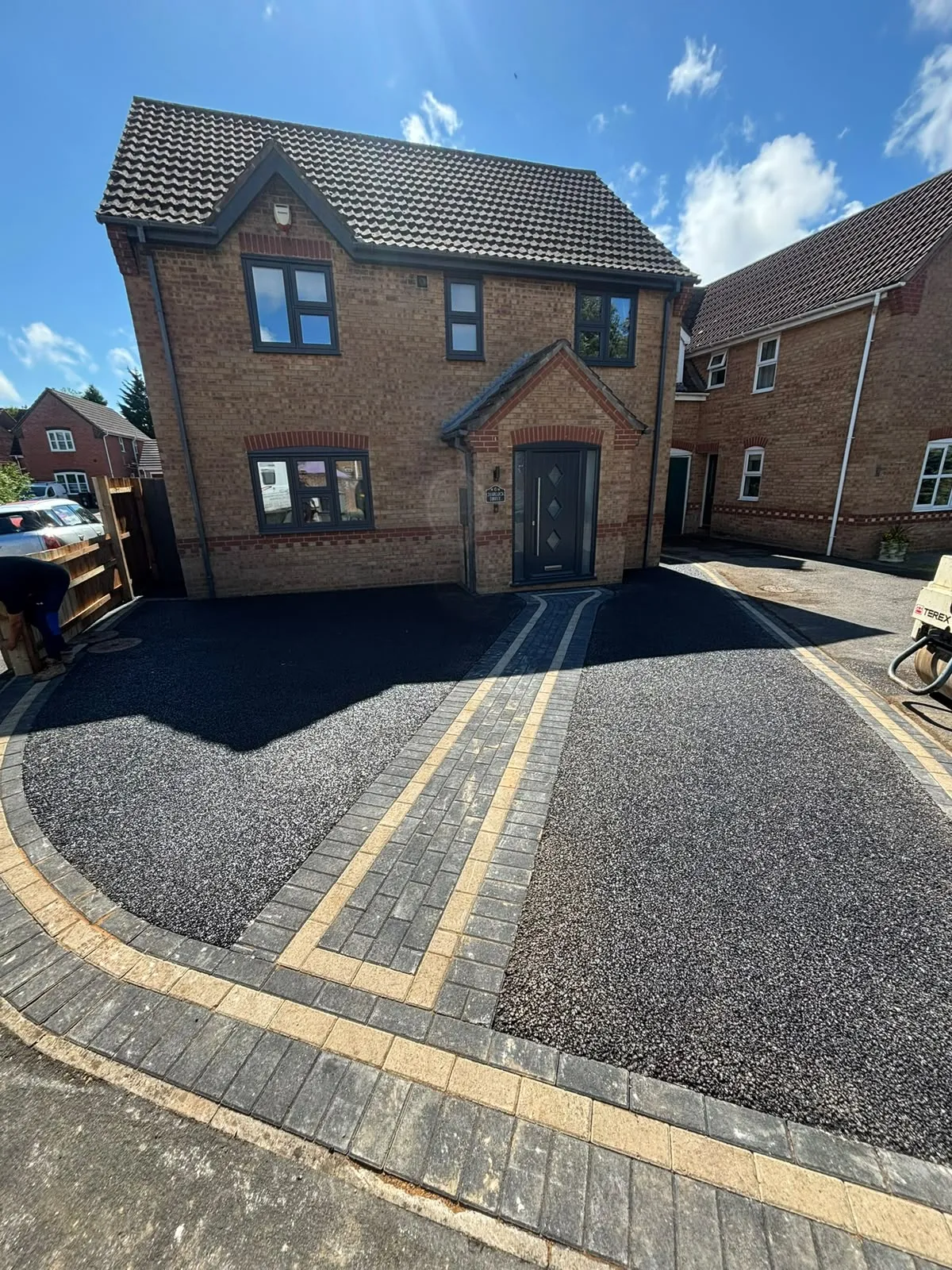
Quick to install, kind on the budget and genuinely durable. For a large drive or a long access it is often the most sensible choice, and it can be edged with block paving for a premium look.
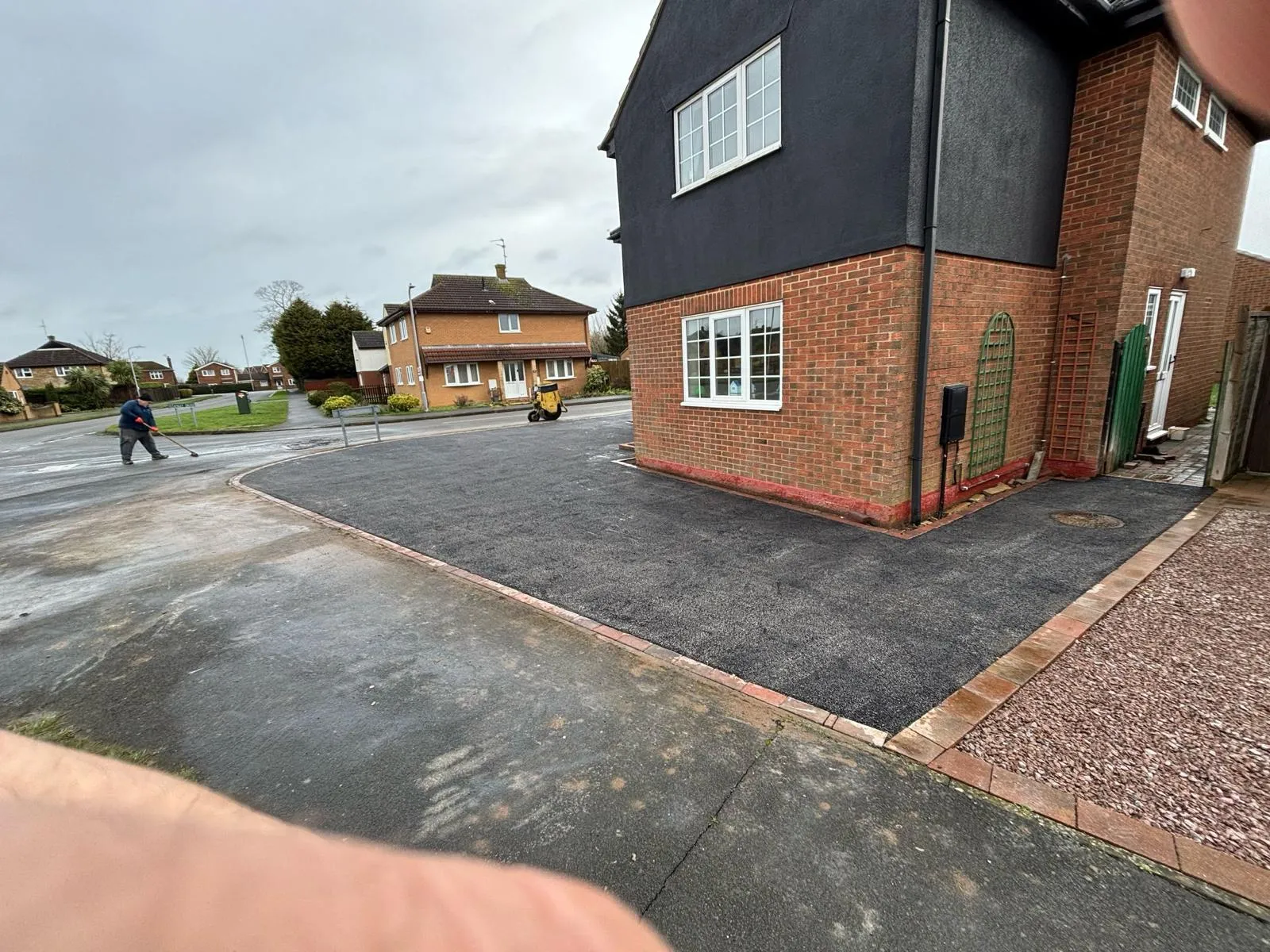
Tarmac is only as good as the stone base under it. We excavate, lay and compact an MOT sub-base, set the falls, then lay and roll the tarmac hot for a dense, smooth surface.
Recent work
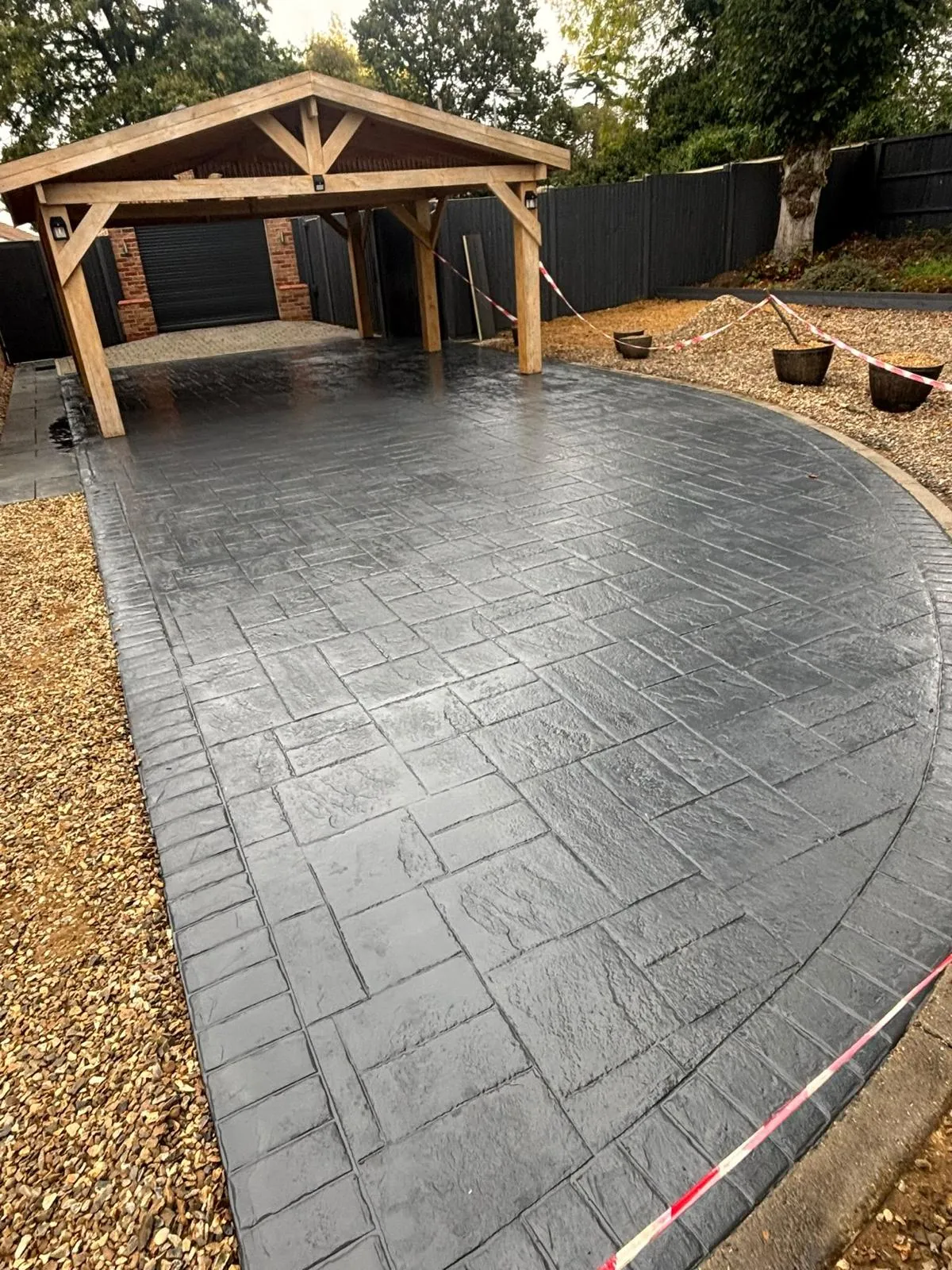
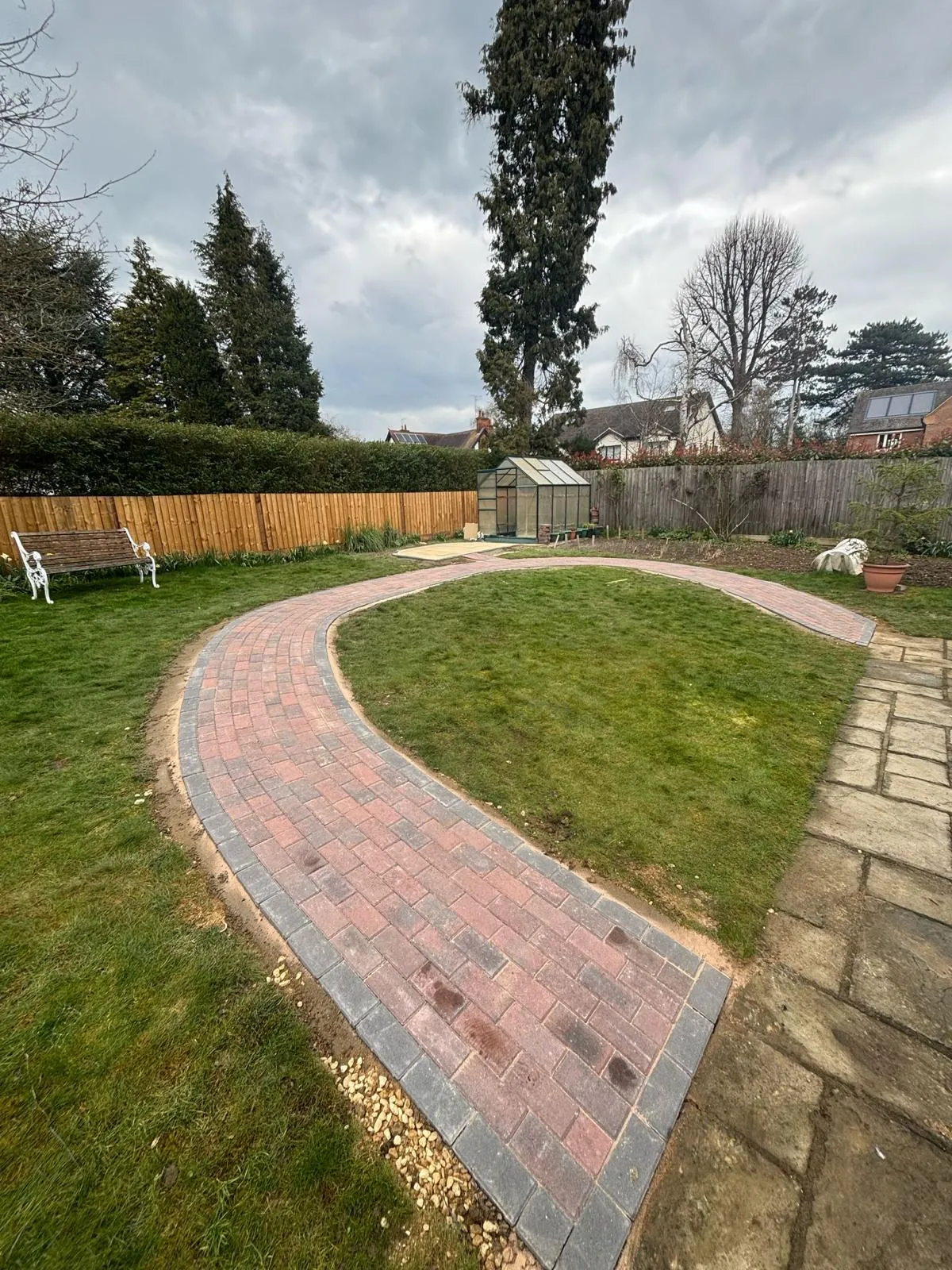
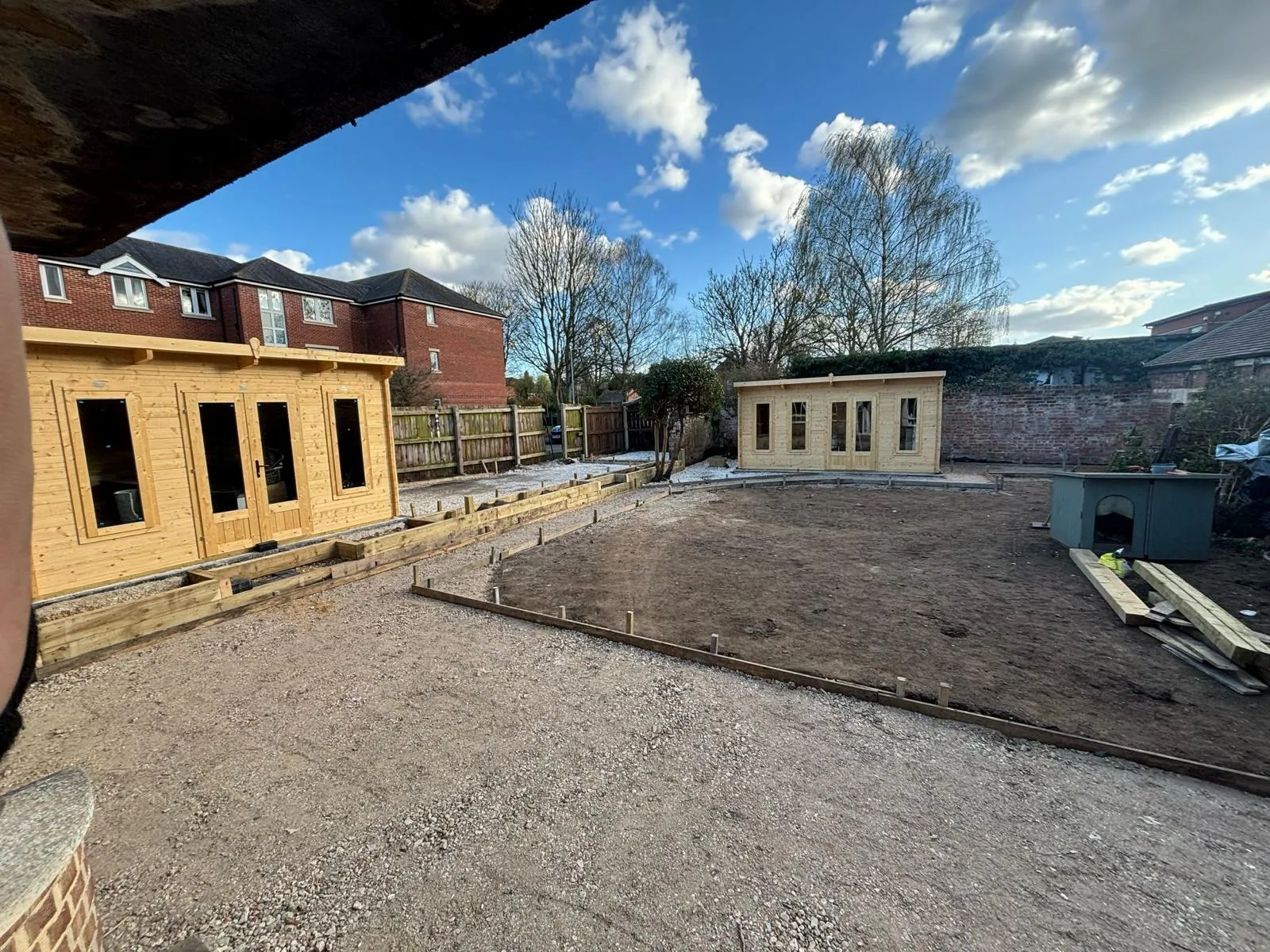
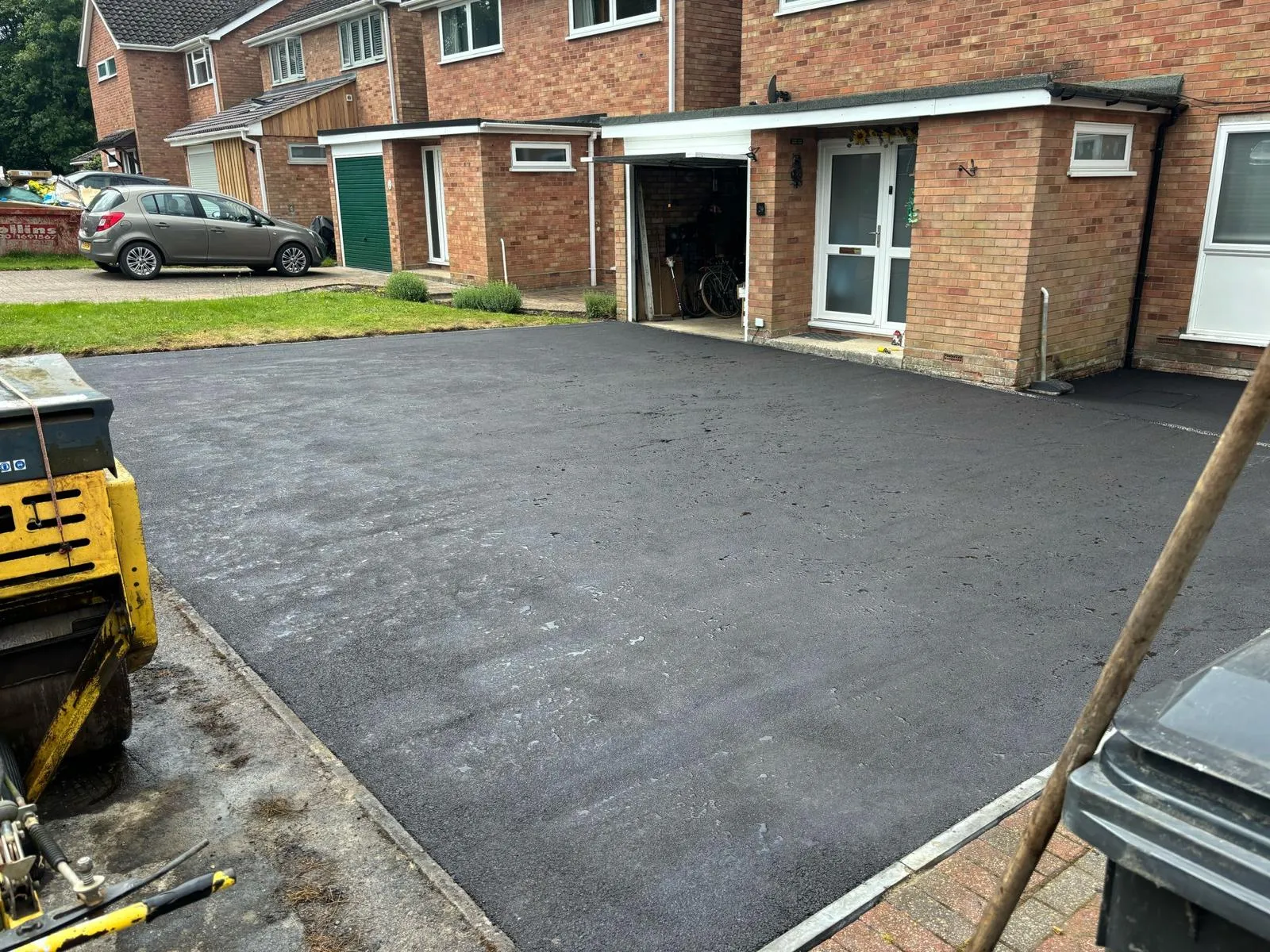
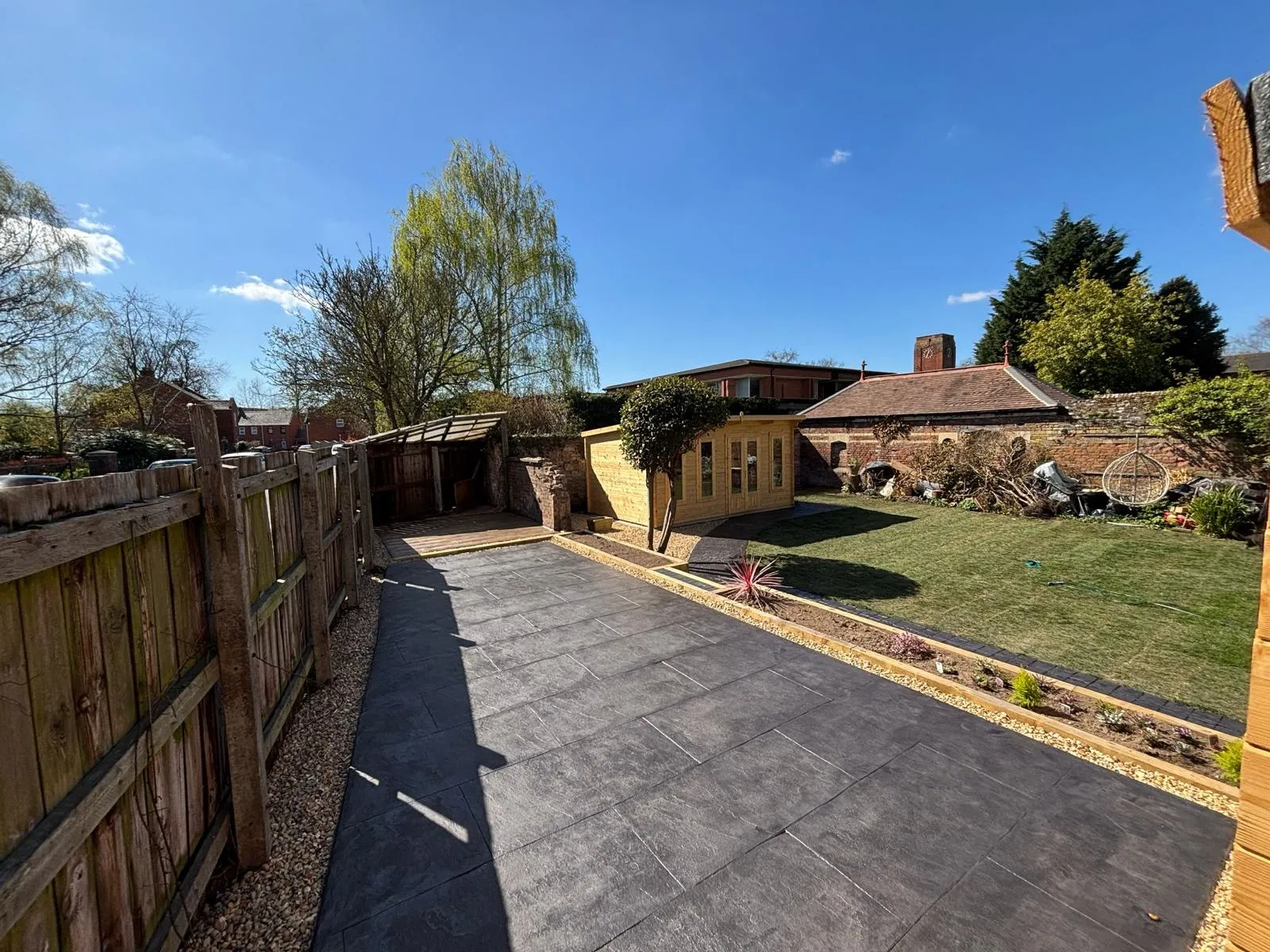
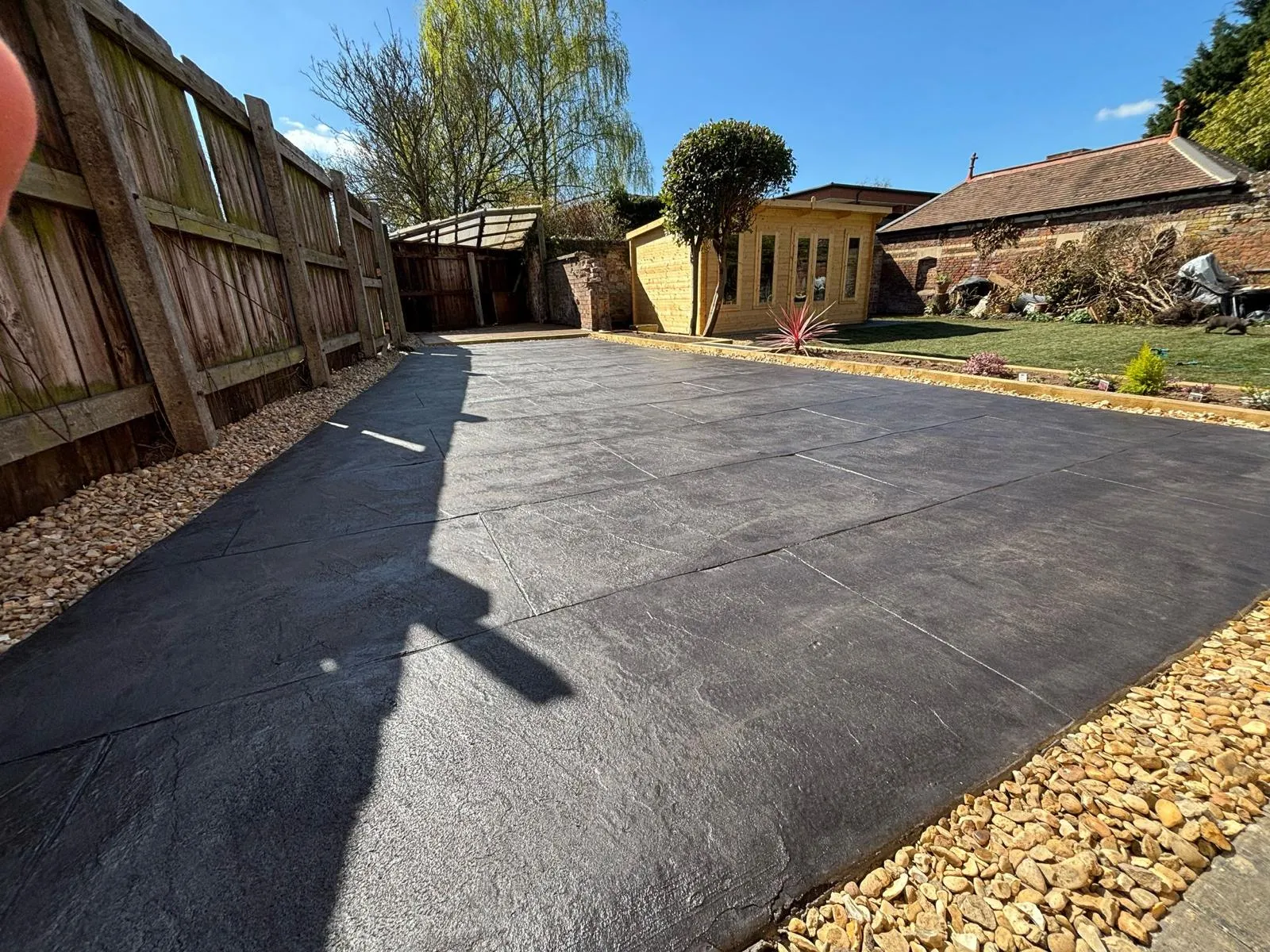
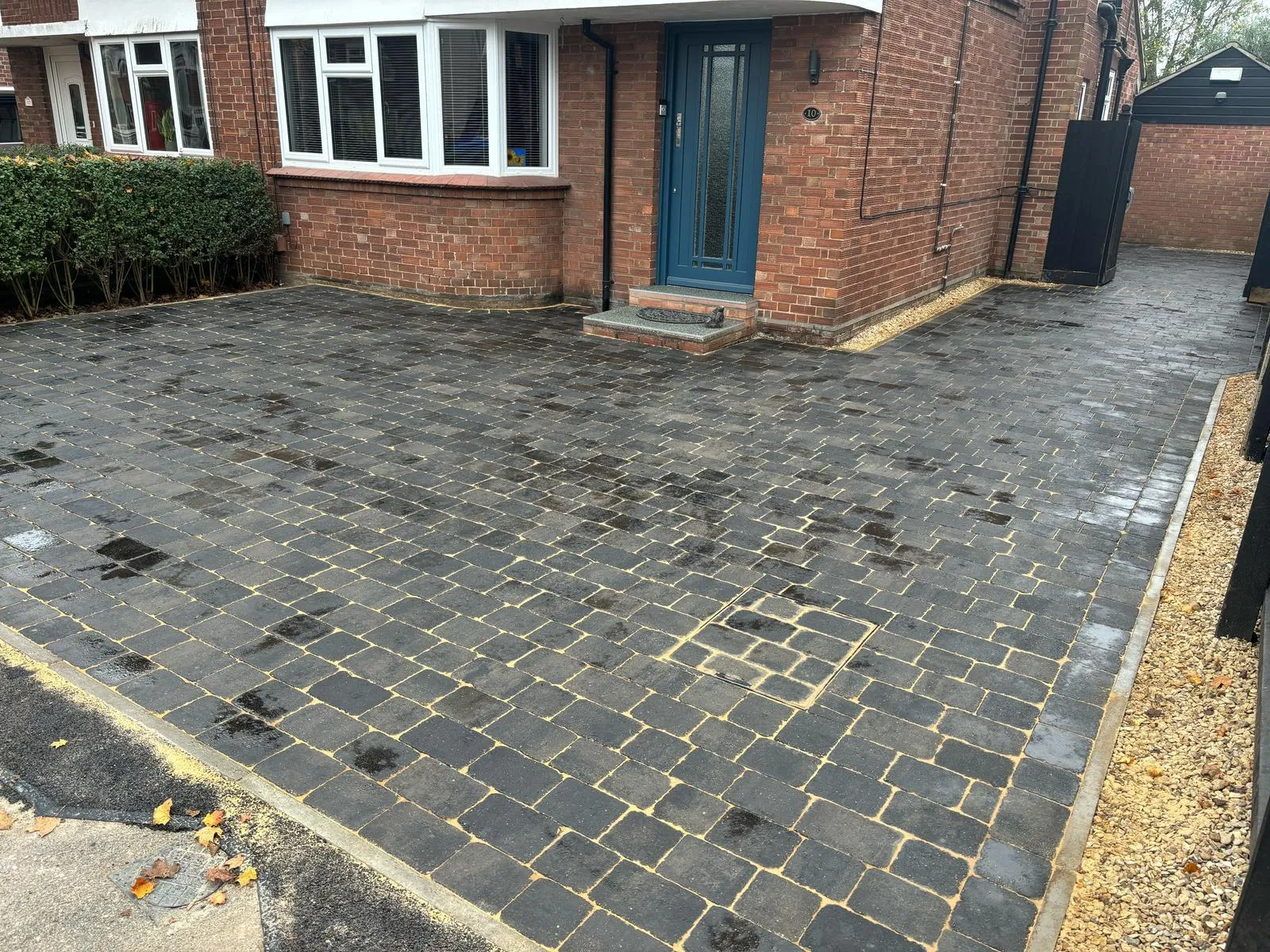
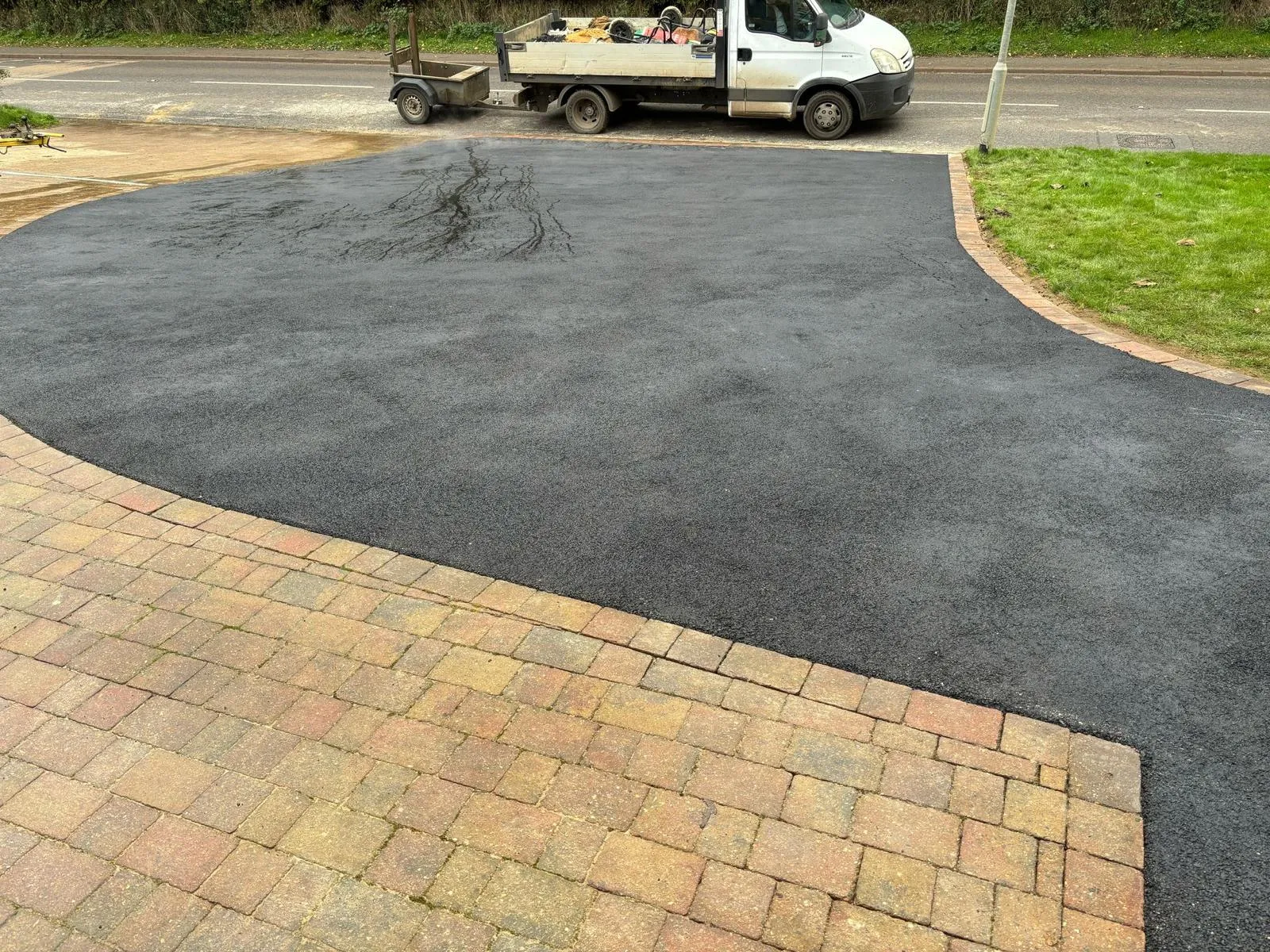
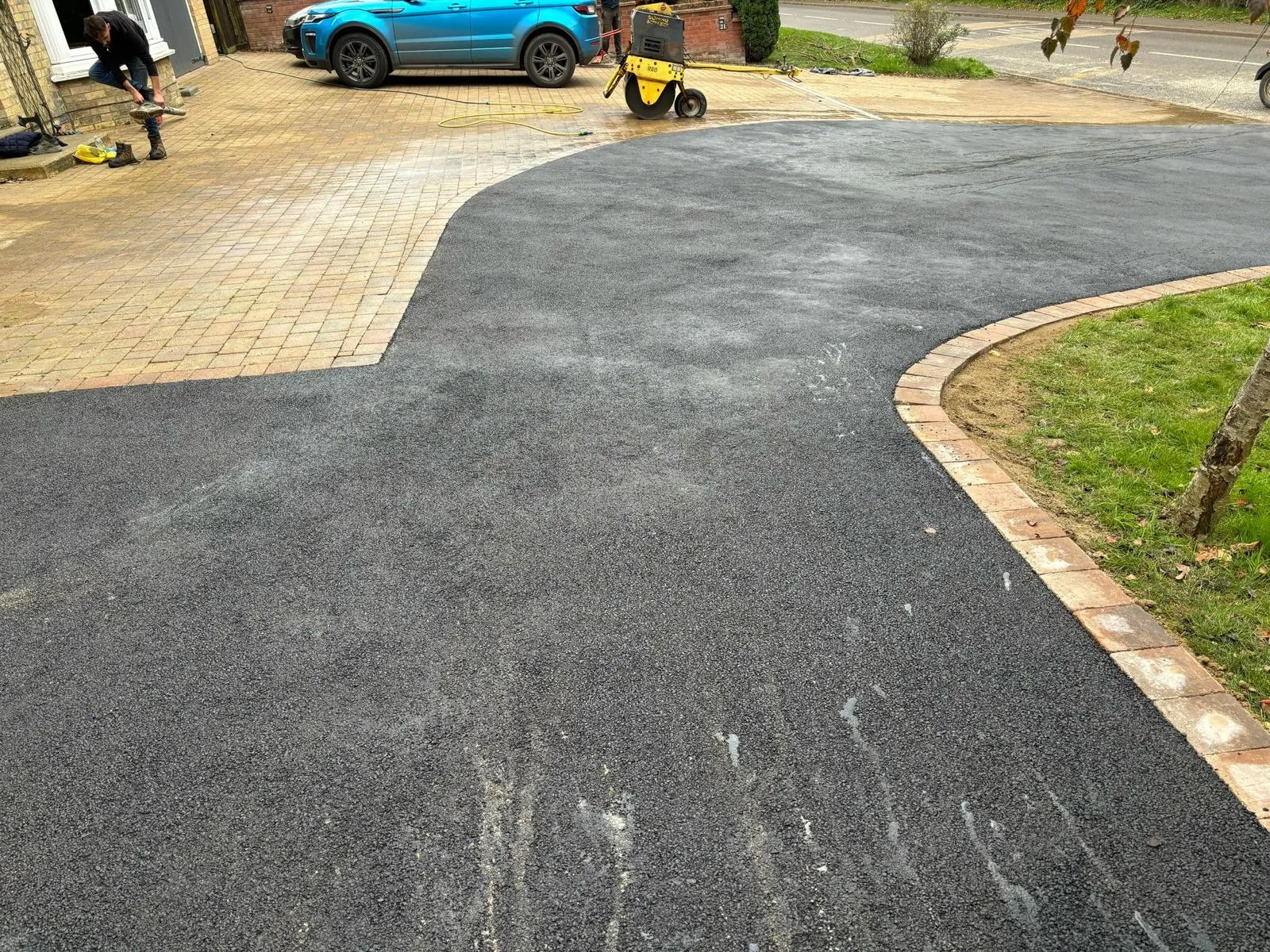
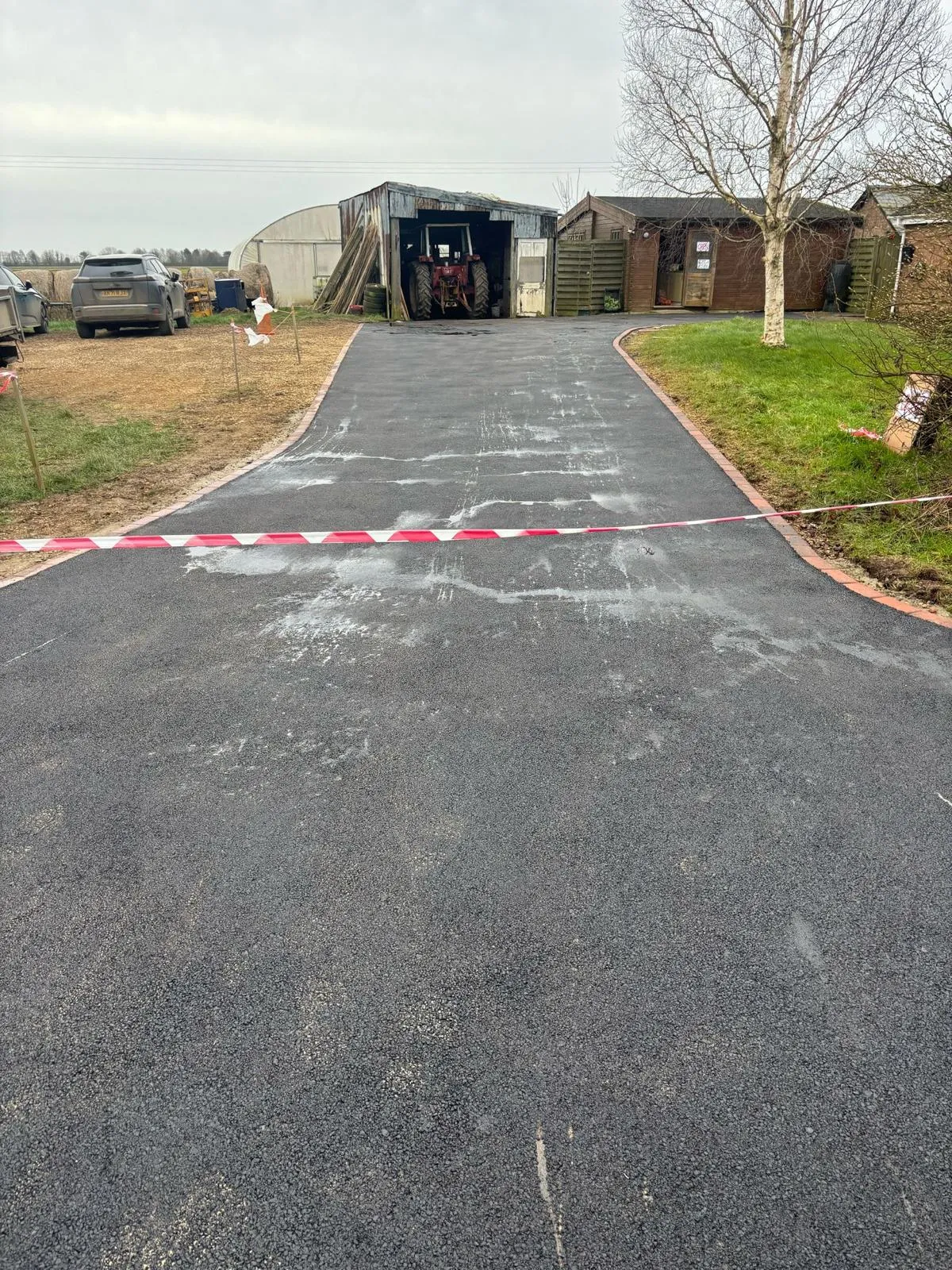
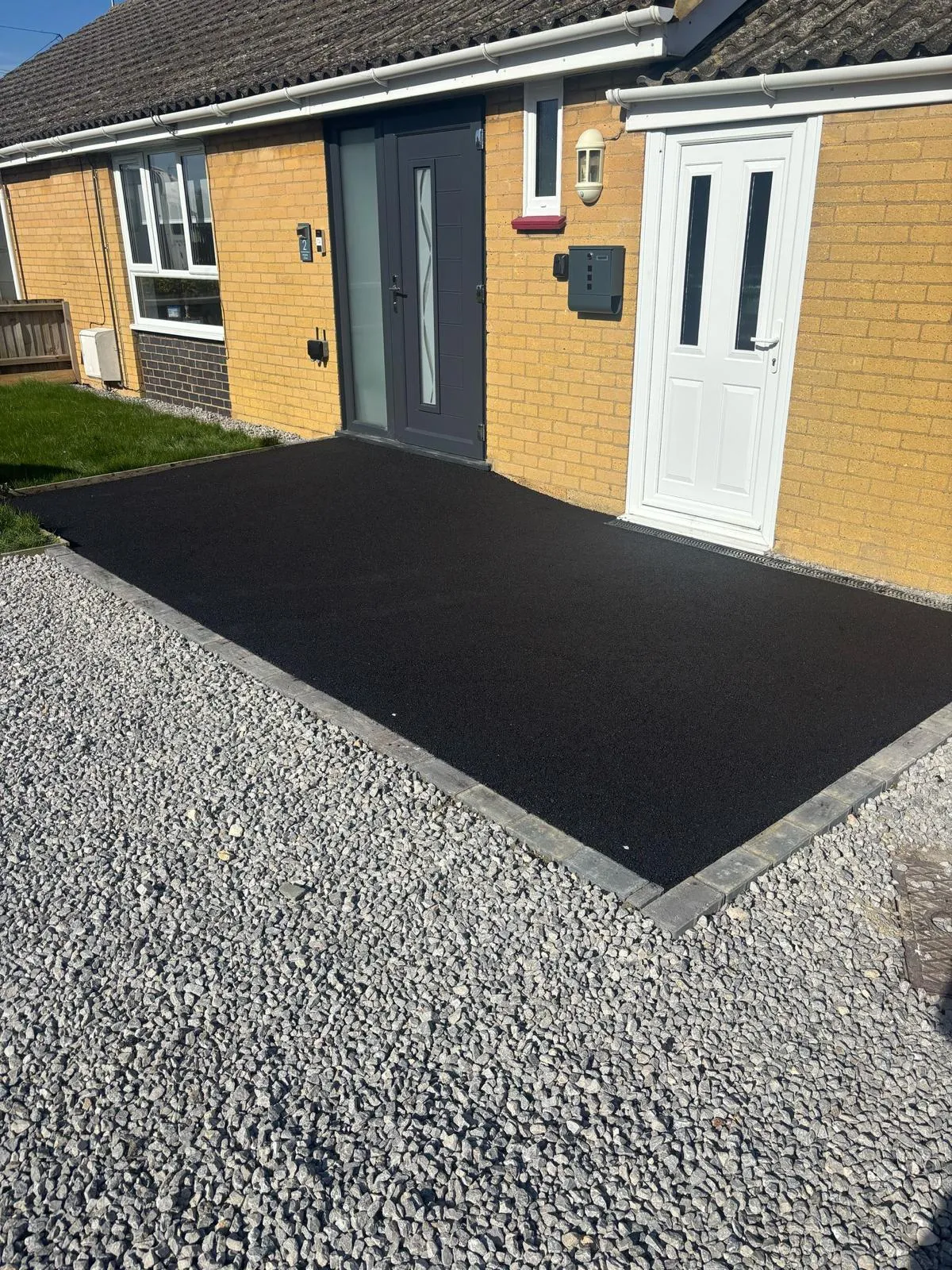
A selection of real jobs finished for homeowners across Wisbech and the surrounding towns.
In depth
A tarmac driveway is only as durable as its build-up. We excavate to a firm formation, lay and compact a stone sub-base, then bind the surface with a base course and a finer wearing course of tarmacadam. On the soft silt around Wisbech that layered structure and proper compaction stop the rutting and potholes you see on drives laid straight onto weak ground. The falls are set so water runs clear.
Edgings hold tarmac together. Because asphalt has no interlocking joints, it relies on a firm restraint at every edge, whether a concrete kerb, a block border or an existing wall, to stop the perimeter crumbling under turning tyres. A block-paved border is a popular way to smarten a tarmac drive and define its shape. Get the edge detail wrong and the surface frays; get it right and it stays crisp for years.
Tarmac is one of the quicker surfaces to lay and often the most economical per square metre, which is why it suits large drives, yards and long rural approaches across the Fens. Cost is driven by area, the depth of build-up, access for the wagon and roller, and any edgings or drainage. A bigger area actually lowers the rate per metre, so tarmac scales well where block paving would climb steeply.
For commercial car parks, farm access and larger driveways, tarmac is hard to beat on speed and value, and it takes heavy traffic well once the base is right. It is a rigid, single-colour finish, so it lacks the pattern of block paving or the colour range of resin, though a red or coloured wearing course is available. Sealing and prompt pothole repair keep a tarmac drive sound for the long term.
How it works
We come out, measure up and talk through materials, patterns and colours, at a time that suits you.
A clear, fixed, no-obligation price in writing. No pressure, no salesmen, no surprises.
Proper ground prep, correct sub-base and falls, then the finish, laid by our own family team.
Site cleared and swept, and we walk you round the finished drive before we leave.
Good to know
With a properly compacted base, a tarmac drive will give many years of reliable service. Keeping the edges supported and sealing when needed extends its life further.
Yes. A block-paved or brick border frames a tarmac drive beautifully and gives a strong edge restraint at the same time. It is a popular finish.
Generally yes, especially over larger areas, which is why it is a favourite for bigger drives and shared accesses. We will price both so you can compare.
Often yes. If the base is sound we can overlay a fresh tarmac surface; if not, we rebuild it properly. We will tell you honestly which you need.
Sometimes. If the existing tarmac or concrete is stable and well drained, an overlay can work and saves excavation. But if the base is cracked, rutted or holding water it will fail again quickly, so we assess it honestly first. On soft Fen ground a full build-up is usually the safer long-term investment.
Standard tarmac is impermeable, so surface water has to be managed with proper falls and a drainage point such as a channel or soakaway. This matters on the flat, high water table Fenland around Wisbech. We set the levels so water runs to where you want it, not back towards the house or garage.
Nearly always a base or drainage fault rather than the tarmac itself. Water sitting under a thin or poorly compacted sub-base freezes, lifts and breaks the surface, especially through a Fenland winter. A correct depth of compacted stone, good falls and firm edgings are what prevent it, which is why the groundwork always comes first.
Free at-home visit and a written, no-obligation price. No pressure, no salesmen, no surprises.